The promise was a lie
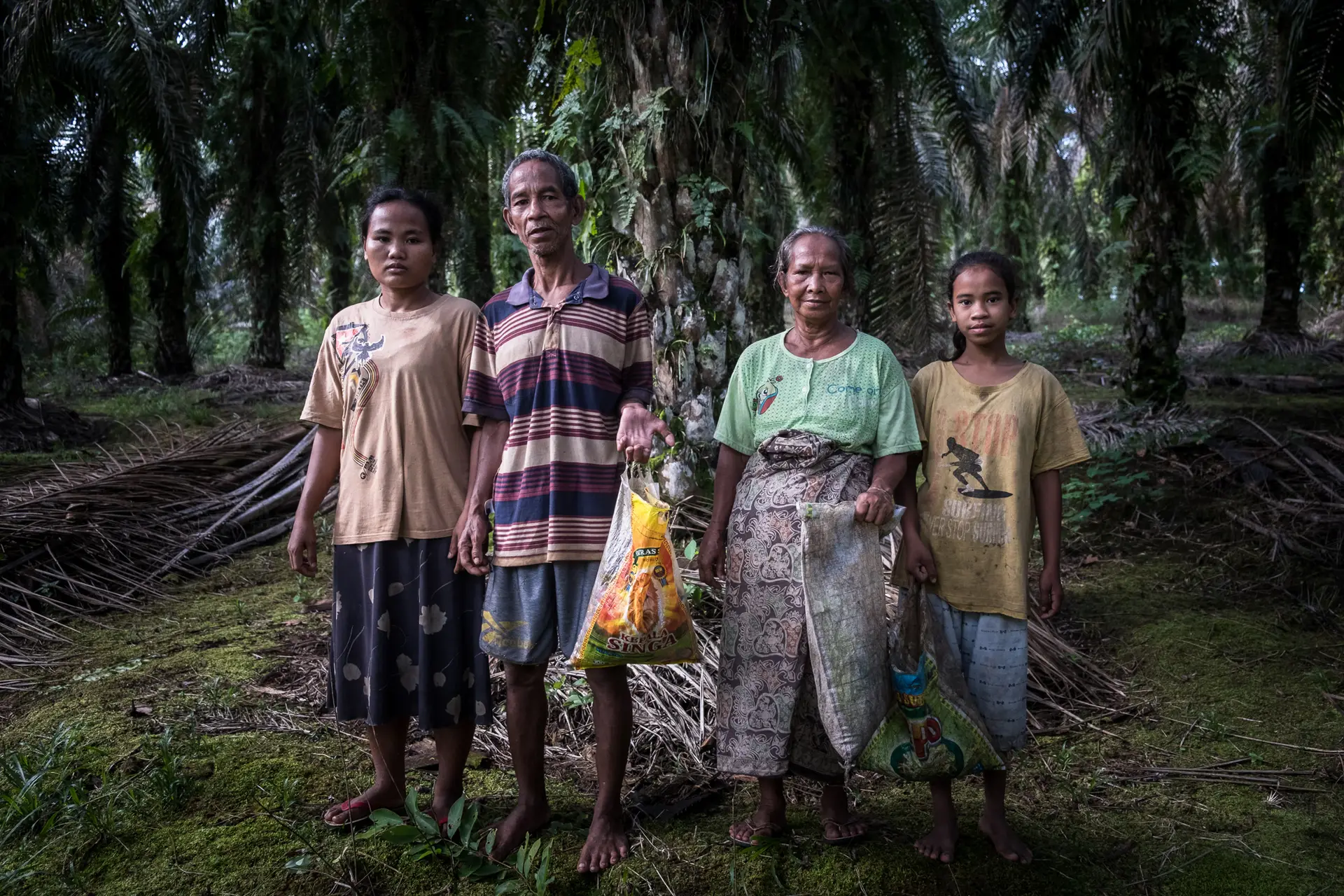
An award-winning investigation with BBC News and Mongabay revealing how palm oil companies deprived Indonesian communities of millions of dollars in profits.
I was part of the reporting team on this investigation at The Gecko Project, as part of a collaboration with BBC News and Mongabay.
The investigation
Since 2007, palm oil companies in Indonesia have been legally required to share a portion of their plantations, or the profits from them, with the communities whose land they occupy. This investigation set out to answer a simple question: were they actually doing it?
Over more than two years, our team analysed allegations against 155 plantation companies, examined 52 cases in depth, and interviewed more than 200 villagers, government officials, academics and company employees across three of Indonesia’s largest islands. We combined fieldwork in dozens of villages with analysis of court records, company reports and government datasets.
The findings were stark:
- Companies had failed to provide around 375,000 hectares of legally required plasma — an area three times the size of Los Angeles.
- In Central Kalimantan province alone, villagers could be losing more than $90 million every year.
- Where plasma was provided, it often failed to deliver. A second investigation, Promised prosperity, drowning in debt, showed how villagers could find themselves locked into opaque 25-year contracts with palm oil companies, earning less than $1 a day while their cooperatives’ debts to the companies ballooned. It traced palm oil from these plantations, finding that it was flowing into the supply chains of major firms such as Nestlé, Unilever and Kellogg’s.
Read the main story: The promise was a lie.
Impact
Within days of publication, the Indonesian government announced an audit of the palm oil industry, and the governor of Central Kalimantan province established a task force on plasma. At least a dozen government actions followed, including parliamentary investigations and threats to revoke companies’ licences.
In 2023, the resulting audit corroborated our findings: the government found that only 581 of 2,864 companies audited — around 20% — were complying with their plasma obligations, and a task force spanning 14 ministries was set up in response.
Palm oil buyers also took action. Six consumer goods companies told us that they had taken steps to verify their suppliers’ compliance, and a petition calling on Mondelēz to stop buying from implicated companies gathered more than 129,000 signatures. BBC World also aired a 16-minute segment and a 30-minute documentary based on the investigation.
The investigation won the 2023 TRACE Prize for Investigative Reporting and a Society of Publishers in Asia (SOPA) award for excellence in Bahasa Indonesia news reporting, and was named among the Global Investigative Journalism Network’s best investigative stories from Southeast Asia in 2022. Mongabay has published a full account of the investigation’s impact.
Behind the story
As part of the investigation, we built a database of conflicts driven by Indonesia’s plasma scheme, compiling more than 150 cases from local news reports, NGO documentation and government sources spanning a decade. We then used the database to identify patterns and target our field reporting. We released the dataset publicly under a Creative Commons licence, and published a methodology explainer so others could build on the work.
The investigation also prompted wider debate about corporate impunity in Indonesia’s plantation zone, including an essay by anthropologist Tania Li, published in our series, examining how state-corporate collusion allows companies to disregard the law.